CAN WE TRUST EACH OTHER?

Welcome to Can We Trust Each Other?

How can we trust people who hold beliefs we think are dangerously wrong? You already have a name for those people. And somewhere, someone has the same name for you.

Most of us handle that problem by avoiding it, or by trying to shut the other side down. Neither approach has done us much good.

Is there another way? Can people who are certain of their own convictions, and certain the other side is wrong, still build enough trust to want to live together?

On Can We Trust Each Other?, we talk to people who've done exactly that: religious leaders, peacebuilders, mediators, public officials, and others who've kept hard relationships alive without giving up what they believe.

We want their stories, the failures and the breakthroughs both. What made trust possible? What put it at risk? What did they learn about themselves and about their rivals?

Our bet: pursuing the whole truth together, as rivals who can still trust each other, gains us more than it costs, for our own side and for everyone else.

This is Can We Trust Each Other?

About

Meet the hosts

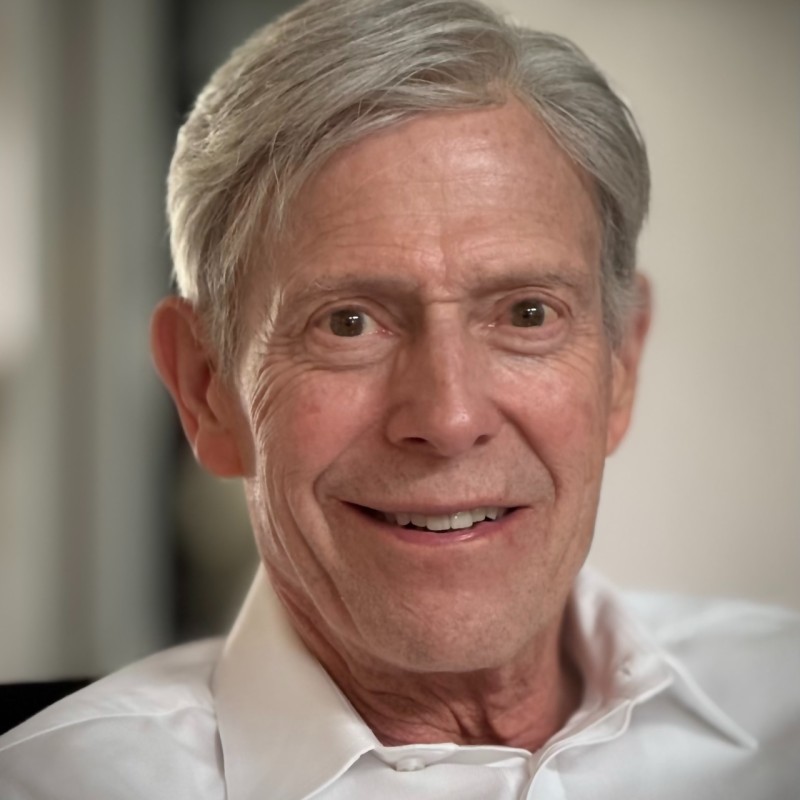
Charles Randall Paul

Charles Randall Paul

Randall Paul spent his first career building things you could see. After an MBA from Harvard Business School, he developed over forty commercial real estate projects worth more than $450 million. Then he walked away from it to study something harder to build: trust between people who can't stand each other's politics or religion. He earned a Ph.D. from the University of Chicago writing about how to respectfully fight over things that can't be resolved, which is either a strange career pivot or exactly the right training for what he does now.

Randall is the founder and president of the Foundation for Religious Diplomacy, where he's spent over two decades running what he calls Heart & Mind Conversations®: real, high-stakes dialogues between people who fundamentally disagree, held everywhere from Utah to Russia to the Middle East. A member of the Church of Jesus Christ of Latter-day Saints who has served as a lay pastor, he built his life's work around engaging critics of his own faith as seriously as he engages critics of anyone else's. He created a protocol called The Way of Mutual Openness©, built out of one core idea: you can hold your convictions and stay open to somebody else's at the same time.

Randall has been married more than fifty years, with five kids and sixteen grandkids. He has also enjoyed decades as an alpine skier. He co-hosts Can We Trust Each Other? because he thinks trust and respectful disagreement are what keep a democracy alive.
John Morehead

John Morehead

For over twenty years, John Morehead has been sitting down with the people most Americans are taught to avoid: Muslims, Latter-day Saints, Pagans, Satanists, and plenty of others outside his own Evangelical Christian tradition. He didn't do it to win arguments or convert anyone. He did it because he believes real trust only gets built face to face, and he's spent two decades proving that even the deepest religious divides can hold a real friendship.

John is the Executive Director of the Foundation for Religious Diplomacy and hosts Multifaith Matters, a podcast built on the same conviction: understanding someone doesn't require agreeing with them. He holds an M.A. in Intercultural Studies from Salt Lake Theological Seminary, and his research digs into why trust is so hard to build across belief, pulling from psychology and neuroscience as much as theology. He teaches at Multnomah Biblical Seminary and William Jessup University.

John has edited or contributed to more than a dozen books on interfaith engagement, and he still finds time to run TheoFantastique, a blog on what horror and science fiction reveal about faith and the sacred. He is, by his own account, more comfortable talking about other people's work than his own.

John co-hosts Can We Trust Each Other? because he's convinced the skill of staying at the table with people you disagree with isn't just a religious skill. It's the one skill this moment is short on everywhere.